
USA Today: John Mellencamp Dedicates Concert To 'Misfits', 'Mavericks' and 'Nonconformists'
USA Today by Melissa Ruggieri Photos By Scott Legato
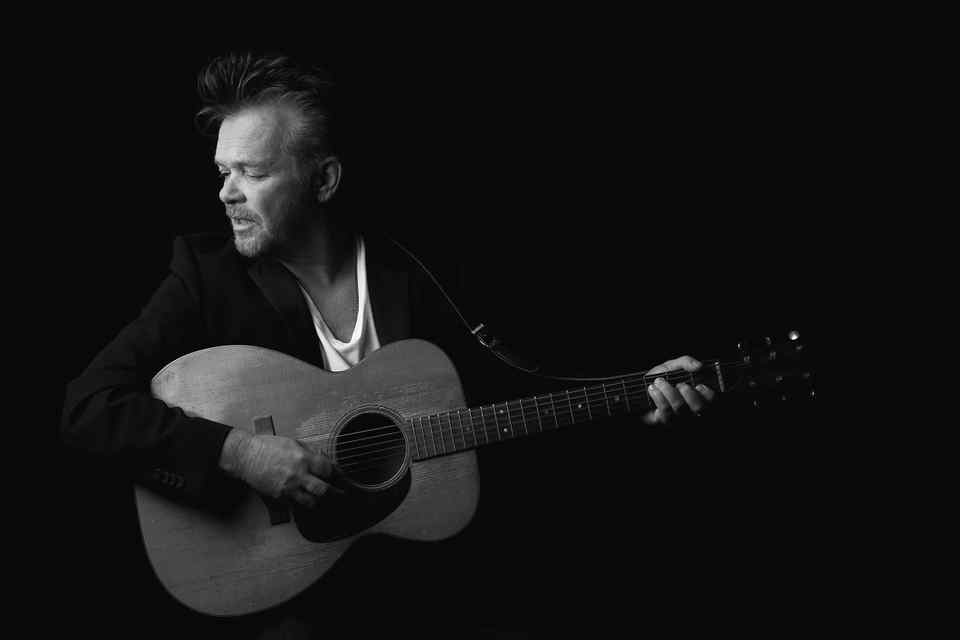
BRISTOW, VA – From the moment he strolled on stage, cigarette dangling from one hand, guitar slung over his shoulder, John Mellencamp oozed authenticity.
He’s midway through an amphitheater run dubbed Dancing Words Tour – The Greatest Hits, a notable distinction considering many of the songs during his two-set, 23-song concert hadn’t been performed live much in years.
But tucked amid timeless muscular gems including “I Need a Lover,” “Cherry Bomb” and “Rain on the Scarecrow” were a handful of album tracks that might not have alighted the charts, but were plucked from the catalog as rare treats for fans.
One of them, 2014’s “Lawless Times,” opened the 2 ½-hour show (including a 15-minute intermission) and its Bourbon Street-swing coupled with Mellencamp’s dry delivery set the tone for a show he dedicated to, “All you misfits, all you mavericks, all you nonconformists.”
It was a fitting greeting, because Mellencamp, 74, has always been candid, from the bratty Johnny Cougar days in the late-‘70s and early ‘80s to the cranky elder statesman who never met an opinion he didn’t want to share.
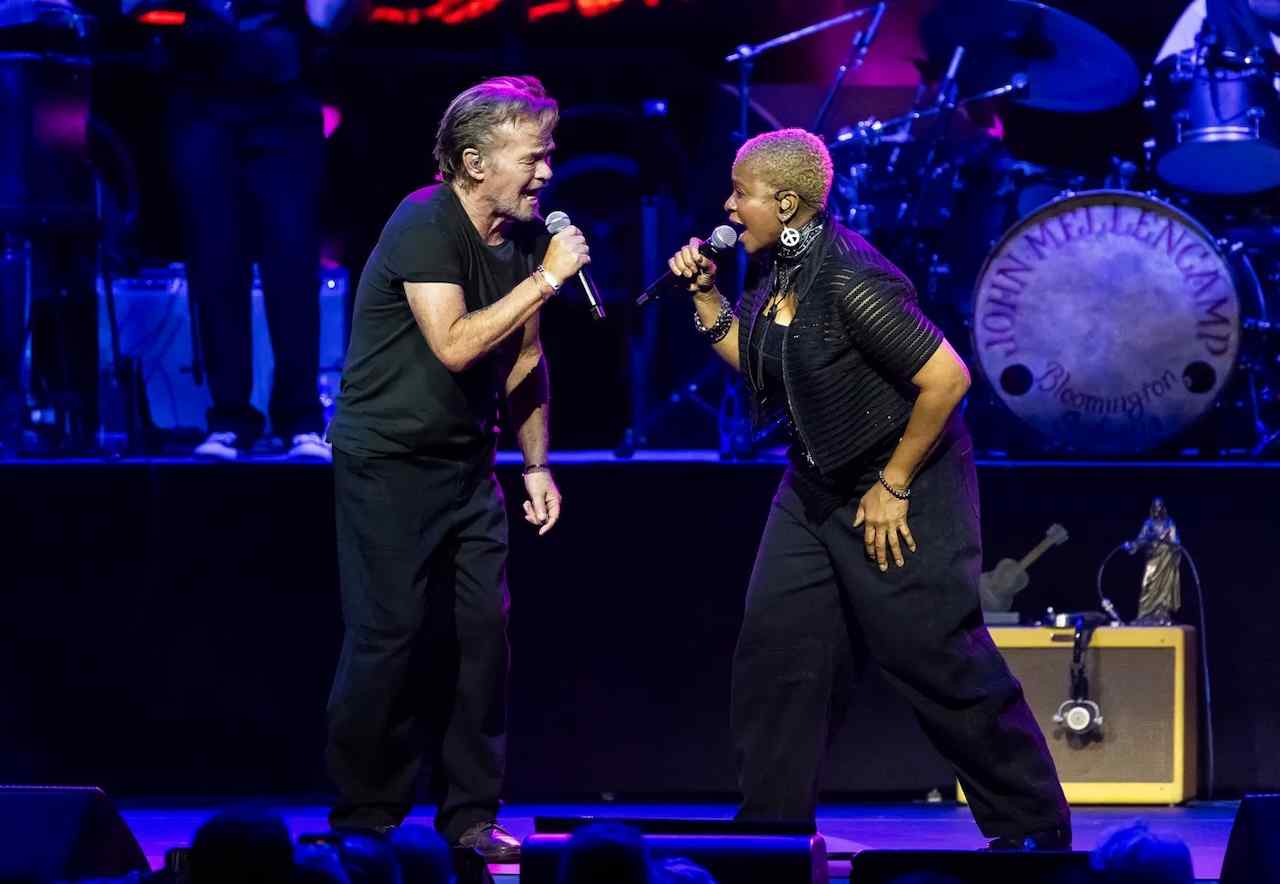
At the July 29 stop at Jiffy Lube Live in northern Virginia, Mellencamp and his tremendous eight-piece band – including multifaceted standout Crystal Taliefero, who returned home to the guy who discovered her after decades playing with Billy Joel – romped and rolled through familiar terrain that never hurt so good.
Here are some highlights.
John Mellencamp's songs have always imparted wisdom
So many of Mellencamp’s songs shuddered with sagacity, from rootsy strummers such as “Small Town” and “Key West Intermezzo (I Saw You First)” – recast as an acoustic ballad on this night – or barn burners “R.O.C.K. in the USA” and “Paper in Fire.”
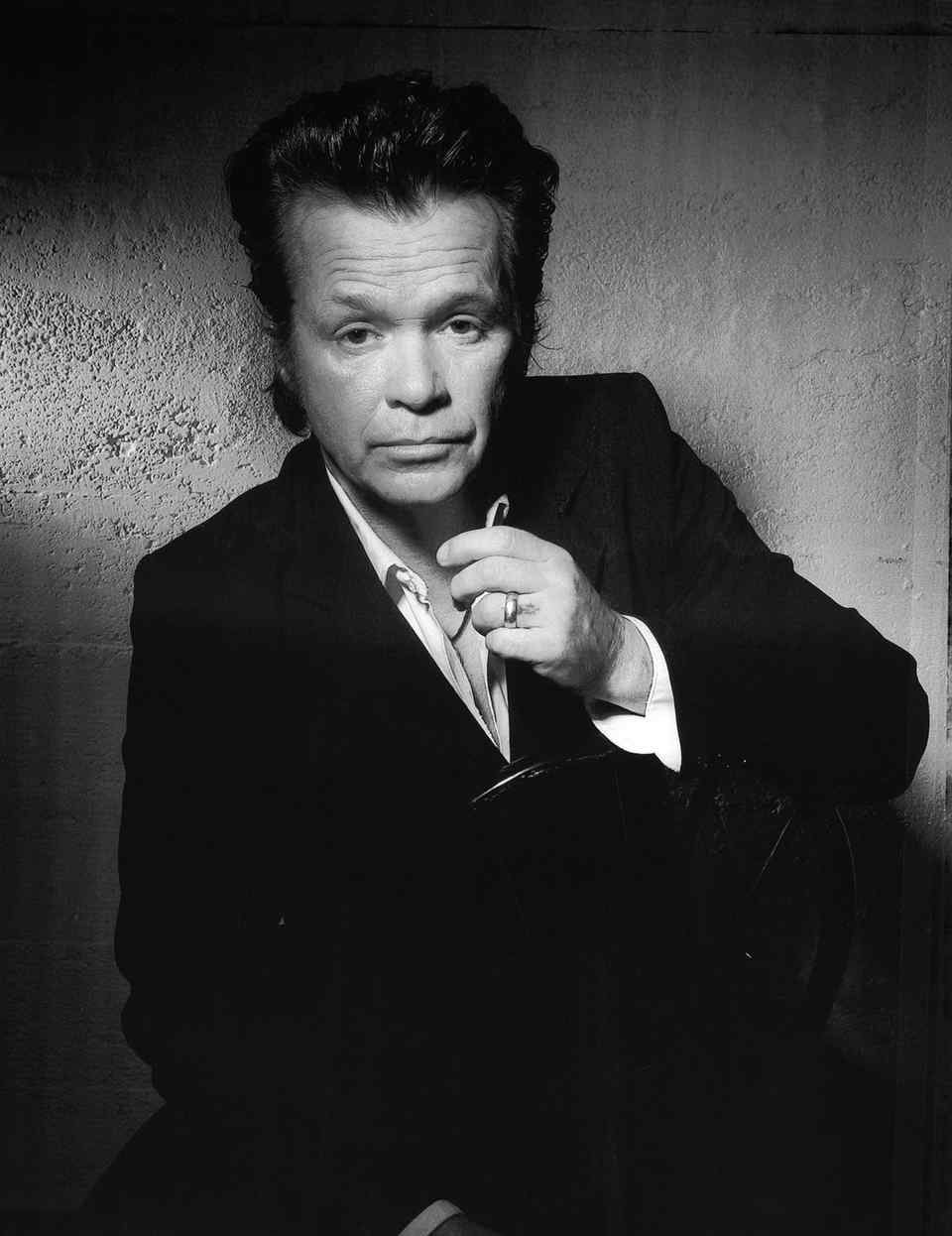
Mellencamp’s grizzled visage is the perfect match to his husky voice that imbues songs such as “Lonely Ol’ Night” and “Ain’t Even Done with the Night” with lived-in wisdom that is even more palpable onstage.
In his white T-shirt and black pants (changing to a black T-shirt for the second act), hair brushed back on the sides except for a stubborn forelock, Mellencamp frequently looked into the crowd to soak in the appreciation being thrust toward him.
His playfulness was on prime display during his little ditty, “Jack & Diane,” which he performed solo with only his acoustic guitar for backup. Teasing the eager-to-sing-along crowd for jumping to the song’s chorus too early, Mellencamp exposed his impish charm as he conducted the chorus of voices.
John Mellencamp will always be a Gulf of Mexico guy
A primarily hits-filled concert always evokes songs that may have been forgotten, the “Oh right, he sings that, too” phenomenon.
But with Mellencamp, it’s more of a memory jogger how many treasured lyrics stem from his classics: “He hit the highway” (“I Need a Lover”); “Life goes on, long after the thrill of living is gone” (“Jack & Diane”); “I fight authority, authority always wins” (“Authority Song”); and “Ain’t that America, for you and me?” (“Pink Houses”).
The last of that group, his 1983 commentary on race and class disparity often misinterpreted as patriotic pabulum, has included improvised commentary from Mellencamp during the lyric about vacationing “down at the Gulf of Mexico.”
Mellencamp’s remarks at other recent shows about the Trump administration calling the body of water the Gulf of America have included some form of “that was stupid.” (The White House responded, calling him an "out-of-touch, woke Hollywood" celebrity.)
At the Virginia show, Mellencamp was more muted, stopping the song to ask, “Didn’t we change the name of that?” Boos from the crowd filled the air as he continued, “The Gulf … of America. I think the Gulf of Mexico is better.” The boos changed to cheers.
John Mellencamp's rebellious spirit drives him

Along with his status as blue collar rocker, Mellencamp is also a respected artist.
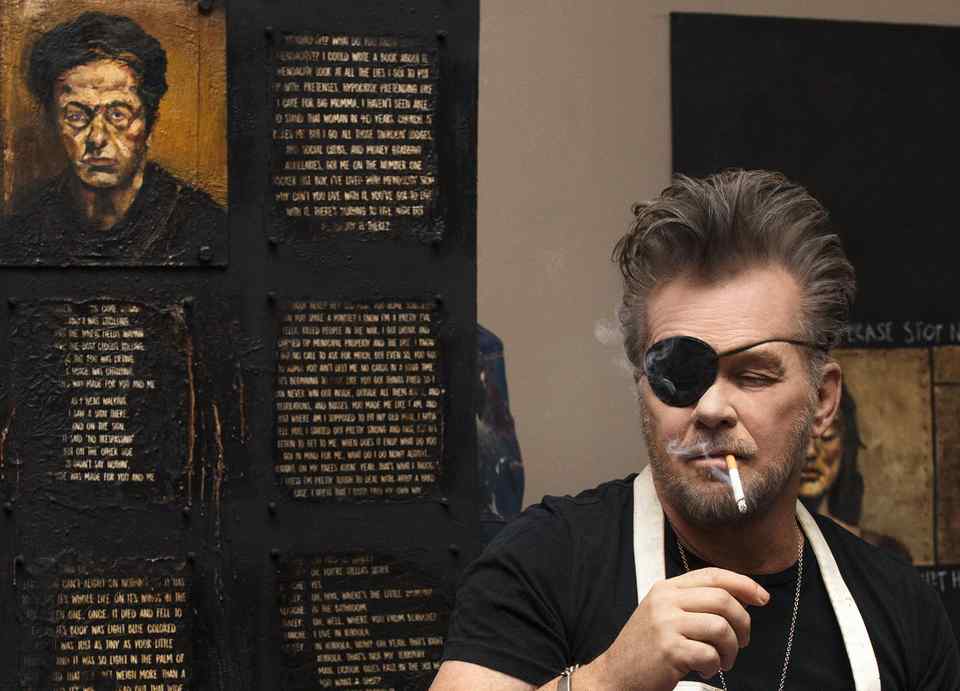
While the visuals for the show – a vintage movie theater, a burning field – lent a polished edge, it was a delight to see many of Mellencamp’s self-portraits scroll behind the stage during the sardonic “Pop Singer.”
Interspersed with Mellencamp’s idiosyncratic views of himself were old press shots of the singer, many sans shirt or showcasing pouts and flexed biceps, that fit the song’s wry message.
But the ensuing offerings – “Authority Song” and “Crumblin’ Down” – were perfectly placed reminders of the rebellious spirit that has powered his career and how the heart of Mellencamp’s music has always been his soul.