|
MusicTechPolicy Blog: Mellencamp Is Right, Brand-Supported Piracy Screws Songwriters AGAIN:
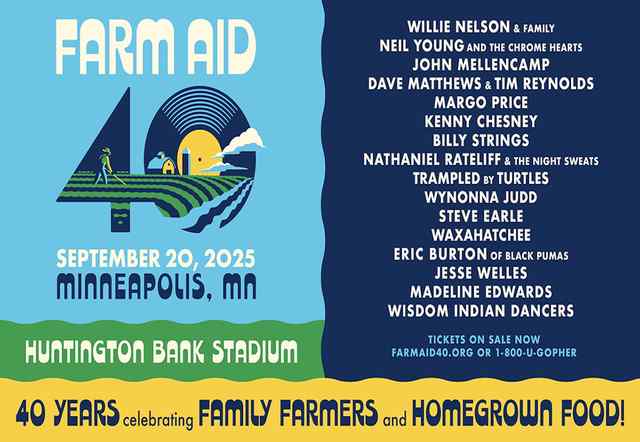
11.07.2012 - Chris Castle, writing on the MusicTechPolicy blog, chimes in about the detractors who have criticized John's internet piracy piece and offers some insights into their possible motives. The points he makes about national advertisers supporting search engines and sites that offer pirated material underscores John's thoughts in a very thoughtful and detailed way.
Mellencamp Is Right, Brand-Supported Piracy Screws Songwriters AGAIN: Snakes
in the Grass, @McDonalds, Google and Other Species of Vermin
By Chris Castle -
MusicTechPolicy
If McDonald’s “restaurants” had snakes and rats running through the kitchen,
they would be shut down for health violations. Instead of snakes in the kitchen,
McDonald’s has let loose vermin on the Internet that are just as threatening to
their customers.
John Mellencamp summed it up nicely in his recent post:
[O]n top of everything, [piracy sites are] collecting advertising money from
Madison Avenue. So what’s happening is your search engine leads you to an
illegal downloading site where you can download — you name the artist — their
entire catalog and, at the same time, see products and services offered for sale
ranging from soft drinks to pornography and, adding insult to injury, that
merchandise appears to be endorsed by the artist to whom it’s attached. The
artist, who is already being stolen from, now appears to be shilling for these
products. The gangsters are making money, but the artist? Squat. (And I do mean
gangsters.. this is not just a couple of kids file trading anymore, these are
criminals, quite literally.)
So how does this work, exactly? Infantile journalists such as Google-spouse
Declan McCullagh at CNET and Lydia DePillis at The New Republic have mocked John
Mellencamp–without doing the work of determining if what he was actually saying
was actually true. [Of course anything that threatens ad revenues also threatens
Google's stock price and the riches of its employees. As Google spouse McCullagh
said, "The FTC wants 'disclosure of material connections' -- are spousal
paychecks and stock options in a community property state like California
'material?'" Yes, they are. Particularly when you are trying to use your bully
pulpit to bully someone who is attacking part of your household income.]
These “journalists” savaged Mellencamp for doing the unthinkable in a
post-Metallica world where artists are carefully taught to be seen and not
heard: It is simply not acceptable that artists articulately point out that bad
guys are stealing on a massive scale and that Madison Avenue supports bad guys
by paying for the advertising that makes bad guys into rich bad guys. Sure beats
pimping.
I can understand why McCullagh might do it–family profits from Google stock
perhaps–but it still takes a certain degree of willful blindness and sadism to
completely overlook the truth of what John was saying about Google’s partners in
crime on Madison Avenue.
The Mad Mad World of Ad Supported Piracy: The Unhappy Meal Served Up to
Artists by McDonald’s, Macy’s, Google and Levi’s

Let’s take Lyrics 007 as an example. Some may not realize the value of lyric
reprints (including digital lyric reprints) but if you thought about it for–oh,
say 10 seconds or so–you would realize that lyrics are part of the song. Songs
are protected by copyright, so lyrics are, too. If you want to use lyrics–like
on Lyrics007 for example–you need a license and you need to pay a modest license
fee.
And before the EFF, Public Knowledge and others on the Google Shill list
start complaining about the length of copyright term and the usual knee jerking,
this post is only going to address recent hit songs. Songs that would be in
copyright even if we were to adopt the extraordinarily extreme views of the
bootlickers for Big Tech on the Shill List and elsewhere in academia.
However, a recent ruling against an illegal lyric site gives some idea ($6.6
milion) of the value of lyrics–which because they are text based are
particularly useful for those in the keyword selling business. So it should not
be surprising that ad serving companies like Google sell advertising on these
sites. They are an SEO dream. (Why do you think that Google tried to sneak song
lyrics into the Google Books settlement?)
Our Communications with McDonald’s (2012)
On July 27, I noticed that McDonald’s ads were being routinely served to the
well-known illegal lyrics site, Lyrics007. I contacted the corporate
communications office at McDonald’s North America and had an extensive
conversation with the representative about how McDonald’s ads were being
published on pirate lyric sites. I then sent the following emails to this person
after that call:
Thanks for your interest, these are the screen shots we discussed.
The attachments follow:


Each of these screen captures shows a McDonald’s ad in a different page
against different lyrics. One screen capture shows the code behind the html page
demonstrating that Lyrics007 has a Google ad publisher account and the path that
we were able to find is coming from Doubleclick (owned by Google) in many
instances. I included the Google Play, Macy’s and Levi’s screen caps to make the
point that McDonald’s is not being singled out.
Part of the discussion I had with the McDonald’s representative involved
pointing her to the work of Professor Ben Edelman in the area, so I sent this
follow up email. In a subsequent call, she said she would show these emails to
her boss, so I resent the screen shot email with a link to Professor Edelman’s
“Advertisers Bill of Rights”:
Thanks for your interest, these are the screen shots we discussed.
This is the link to the Ben Edelman article:
http://www.huffingtonpost.com/benjamin-edelman/towards-a-bill-of-rights_b_500992.html
Despite the apparent interest, I heard nothing from McDonald’s.
McDonald’s Serves the Olympic Brand to Pirate Sites
Having heard nothing further, on August 1, I happened to notice that not only
had McDonald’s continued to advertise on Lyrics 007, the company was now serving
both their own ads and a 2012 Olympics campaign–which suggests that the ad
publisher links were active as the Olympics was then underway. I sent the
following email and screen capture to the McDonald’s contact:

Dear Ms. ____
I write to you as an attorney who represents both recording artists,
producers, independent record companies, songwriters and music publishers. I
also represent technology companies (starting with the original Napster) who
wish to negotiate legitimate business models. My work in trying to bring
technology companies and rights holders together has taken me all over the
world. I have spoken about these issues at the US Congress, the UK Parliament
and the OECD. I am a member of the legal and legislative committee of the
American Association of Independent Music, the indie label trade association
(although I write to you as an individual and not on behalf of anyone).Never
have I seen such a gigantic step backwards in bringing legitimate companies to
market as I have seen with so-called “Web 2.0” pirates. Advertising-driven
piracy has produced what I believe to be one of the largest and most
systematized organizations of fraud and deception in history. I tend to agree
with the U.S. Department of Homeland Security that many of these sites are run
by organized crime. Unfortunately, those charged with maintaining the integrity
of brands like McDonald’s are, I believe, just as deceived as are the artists,
moviemakers and other intellectual property owners whose works are sold in a
vast black market of criminal proportions.
In addition to the screen captures I previously sent to you, I have now found
another McDonalds’ ad on the Lyrics007 site that also features the Olympics logo
(copy attached). I have dealt with the Olympics several times in my career and I
would be absolutely stunned if the IOC agreed to allow McDonald’s to trash the
Olympics brand by including it in advertising on illegal sites.
Having said that, my initial reaction is that I wish there were anything
particularly surprising about McDonalds’s situation. Having been down this path
before, I think I can predict what you will be told:
1. No one knows anything at McDonalds. It’s all a mystery.
2. McDonalds’s outside advertising agency uses a variety of advertising
networks, exchanges, auctions, etc., to deliver your advertising to a large
inventory of websites. “Millions” of sites, no doubt. So many that they are
impossible to police. (This will be offered as an excuse for continuing the bad
behavior, not as a rationale for why it is irresponsible to be in a position
where you cannot control your brand—see “naked trademark license”.)
3. McDonalds has a contract with an advertising agency that requires strict
controls on McDonalds’s valuable brand and prohibits the brand from being served
to a variety of places, including pirate sites that deal in infringing content,
illegal drugs (i.e., drugs sold without a prescription or counterfeit drugs),
illegal or fraudulent mortgage products, human trafficking sites including “mail
order brides” and the like.
4. McDonalds’s ad agency has a corresponding agreement with an ad agency or
other intermediary or series of intermediaries all of which have made reciprocal
promises to the advertising intermediary as the intermediary made to McDonalds.
5. McDonalds’s reporting from the intermediary includes not quite enough
information for the ad agency and McDonalds to be able to determine the
particular sites where the ads show up, do not include screen captures, and
generally lacks sufficient evidence for McDonalds to know that your advertising
is being delivered to pirate sites.
6. McDonalds pays for the advertising, and McDonalds’s payment is shared with
all the intermediaries and the pirate site.
7. No one ever audits the ad networks because no one wants to know.
8. This process is repeated millions of times a day if not an hour so it is
“impossible” to track—except everyone in the chain somehow gets a share of
McDonalds’s advertising spend. That part can be tracked just fine.
9. This process is repeated for hundreds if not hundreds of thousands of
other brands.
10. Everyone is happy because everyone gets paid—except the creators.
11. No sale of intellectual property is a lost sale because all sales are
monetized—for everyone except the owners of the intellectual property being sold
on black market sites.
12. McDonalds will point to some verification service like Double Verify (or
as we call it, “Double Blind”), which I believe to be largely incompetent and is
employed by the ad networks to make it look like they are doing something to
prevent theft when in fact there is, if anything, more theft than there was
before Double Verify.
Does that sound familiar?
The biggest ad networks are involved. As you will note, Lyrics007 has a
Google Adsense publisher account and many of the ads on its site are served by
Google. What the artists are told by companies like Google is that Google
endorses a “follow the money” approach to catching illicit advertising sales.
They would like independent artists to spend the time tracing the ad revenue
through a labyrinth of companies—a labyrinth which, by the way, I am told has
suddenly gotten even more complex since the SOPA legislation was withdrawn.
Strange coincidence.
An increasing number of artists are of the mind that when they see a
McDonalds ad on a pirate site, they will follow the money—to where it starts.
And it starts with McDonalds. We know where it starts and where it ends. We
don’t really care how it gets there, how many noses are in the trough as the
dollars make their way to the pirate’s bank account which always seems to be in
China or the former Soviet Union (Lyrics007 is registered in China). We know in
this case that for whatever reason, McDonalds is the ultimate paymaster of what
is no doubt a legion of thieves. Whether McDonalds knows it or not. And in this
case, it appears that the ads are served by Google Adsense as Lyrics007 has a
Google Adsense publisher account and many of their ads can be traced back to
Google with little effort.
By the way—we agree with Professor Ben Edelman of the Harvard Business School
that it is ultimately the McDonalds shareholders who are being ripped off just
as much as the artists are. McDonalds should not only be entitled to
transparency in accounting but accountability from its advertising agencies.
McDonalds should be getting rebates when its ads show up in places that are
damaging to its brand and that it never authorized. Or I should say that you
hope no one at McDonalds or acting for McDonalds ever authorized, and I have to
bet that the IOC would agree with McDonalds use of its logo in this unsavory
manner.
Berkeley journalism professor Ellen Siedler has written an excellent blog
about this problem called “Pop Up Pirates” (www.popuppirates.com) in which she
documents repeated instances of advertising served by Google on the Hong
Kong-based Megavideo site. If you recall from newspaper accounts, the FBI and
the New Zealand police raided the multimillion home of Megavideo’s owner, Kim
Dot Com on a federal indictment for violation of the Racketeer Influenced and
Corrupt Organizations Act (“RICO”). Dot Com is currently under house arrest
awaiting extradition from New Zealand (where he bought a resident visa for $10
million) to stand trial in the U.S. for his crimes.
Dot Com’s federal indictment estimated that he made over $175 million in a
few years using a scheme like the one I’ve outlined above. Realize that Dot
Com’s $175 million is his share of mostly advertising revenue that was split
with adserving networks including Adsense and Adbrite according to the
indictment.
You should also realize that there are many counts of money laundering
included in the Dot Com RICO indictment, each of which is a RICO “predicate”. No
brands have been indicted yet under the RICO statute, but it is made for
prosecuting that kind of network and the trial has not yet started. (You may
recall that RICO was the principle statute used by the FBI and the Department of
Justice to prosecute the Mafia, Michael Milken and others for massive insider
trading and money laundering.)
Another good example of this problem is in the area of pharmaceutical
intellectual property infringement and violations of the Controlled Substances
Act promoted and sustained by advertising sold by Google’s advertising entities.
Google paid one of the largest fines in U.S. history last year under a
nonprosecution agreement following a years-long grand jury investigation into
its advertising practices–$500,000,000.
Let me say that again—half a billion dollars.
US government agencies ran several different sting operations against Google
that revealed that the company knowingly sold advertising that promoted the sale
of prescription drugs such as RU 486, oxycontin, human growth hormone and
steroids to name a few. This sting was well-documented in reporting in the Wall
Street Journal by the Journal’s Thomas Catan. I would be happy to put you in
touch with Mr. Catan directly.
According to the U.S. Attorney for Rhode Island as quoted in the Wall Street
Journal, the 4.2 million emails and other documents that Google was compelled to
produce to the Rhode Island grand jury demonstrated that the knowledge and
decisionmaking to promote the sale of illegal drugs went to the highest levels
of the company, including Larry Page. These drugs were sold in a variety of
online “pharmacies”, including in countries that are the targets for Interpol’s
Operation Pangea.
And yet if you go to Google search right now and put in the search term “buy
oxycontin online no prescription” you will get Autocomplete suggestions
(including “buy oxycontin online no prescription cheap”). There are also paid
search results and links to what are pretty clearly illegal pharmacy sites. So
not much has changed. Except Google is participating in a White House effort to
shut down illegal online pharmacies. Like Double Verify, we are not convinced
that this is a serious effort. We will start to be more convinced when Google
has done something as simple as clean up Autocomplete.
And of course, the Google shareholders pursuing a variety of shareholder
derivative actions against the Google board are not convinced either.
So ask yourself—when an artist knows this information, what do they think
when they see a McDonalds ad on a site that is selling their music or movies
illegally or the music or movies of one of their friends?
They think you are in on it. Can you blame them?
I would like to encourage McDonalds to understand the gravity of what your
company is involved in. What is necessary and would be welcome is for the brands
to align with the artists, film makers, authors, songwriters, actors and others
who buy your products and endorse your brands and really crack down hard on
whoever is responsible for your ads showing up on pirate sites.
Harvard Business School Professor Ben Edelman has an excellent summary of the
problem: http://www.benedelman.org/advertisersrights/ “Towards a Bill of Rights
for Online Advertisers.” (Note this was written in 2009—imagine how much of
McDonalds’s money has been paid to the black market since then.)
Because I can assure you that when you research McDonalds advertising
practices, you will find that the Lyrics007 ad is just the tip of the iceberg.
If you can get anyone in the chain to tell you the truth.
What is also necessary, and what I think would be truly commendable corporate
governance on the part of McDonalds, would be for McDonalds to disclose how it
has been unwittingly caught up in this corrupt organization and the steps it has
taken to be sure—certain, preferably—that McDonalds has done everything to
produce the result that no McDonalds advertising appears on illegal sites.
We are often told that artists should just give up because advertisers will
make them play an endless game of whack a mole to stop the support of thieves by
major brands. I would suggest to you that two can play that game, and frankly
McDonalds have a lot more to lose with the future disclosures.
But wouldn’t it be a much more productive to stop the flow of money to these
illegal sites? The artists want it to stop and I’m sure you do, too. But only
McDonalds is in a position to stop its own advertising spend that is split with
illegal sites absent a court order. Let the government prosecute the criminals
for the past, but going forward wouldn’t it be infinitely more productive for
McDonalds to get a rebate for these illegal advertising sales and for the
artists to have the comfort that they have an ally in a fine brand like
McDonalds?
I’m happy to discuss with you further if you like.
At this point, I decided to post the McDonald’s/Olympics logo story on MTP’s
Wall of Shame.
The issue in this particular advertisement is that McDonald’s not only is
trashing its own brand by adopting ad space on illegal sites, it’s also trashing
a partner’s brand–the Olympics no less–by trashing both of them together. Having
dealt with the Olympics over the years, I can guarantee you that McDonald’s
serving this ad in this way violated the spirit if not the letter of its
co-branding agreement with the Olympics.
Yet McDonald’s did not reply, and did not remove the ads, either.
Asleep in the Executive Suite
Still no response from McDonald’s on September 5, so I sent an email to Heidi
Barker, McDonald’s Senior Director of Global Communications. McDonald’s
investors and analysts will recognize her name as she usually is the media
contact for McDonald’s investor relations.
I forwarded the email I had sent to the previous McDonald’s contact and also
included the screen captures as well as a screen capture from a few minutes
before I sent the email:
Dear Ms. Barker, I would appreciate a reply to the email I sent to [Ms. X] on
August 1 following a telephone conversation. McDonald’s advertising is still
being served to the illegal site lyrics007.com as recently as today. In addition
to the screen capture of the McDonalds ad with the Olympics logo, I’ve also
attached one from last night and confirmed this morning that the McDonalds ads
are still being served to the illegal site.
As I’m sure you understand, when users arrive at the illegal site and see
McDonald’s advertising, they are induced into believing the site to be
legitimate by the air of legitimacy you provide with your brand.
I look forward to your explanation.
Thanks.

Now this is right about the time that The New Republic needs to listen up. As
John Mellencamp said in his Huffington Post piece, “So what’s happening is your
search engine leads you to an illegal downloading site where you can download —
you name the artist — their entire catalog and, at the same time, see products
and services offered for sale ranging from soft drinks to pornography and,
adding insult to injury, that merchandise appears to be endorsed by the artist
to whom it’s attached.”
While Lyrics 007 is not downloading (other than illegal ring tones), you get
the idea. It sure makes it look as though it is authorized, and having brands
like McDonald’s and the Olympics–brands that are well known for zealously
guarding their brand value–clearly ads to that appearance of authenticity of
which John complains.
Begging to be on the Wall of Shame
Another month went by, and still no response from McDonald’s. On October 13,
I sent this email to Ms. Barker:
Dear Ms. Barker, I would appreciate a reply to the email I sent to Theresa
Riley in your office on August 1 and the email I sent to you on September 5
regarding McDonald’s advertising on the illegal lyric site lyrics007.com. I wish
to call your attention to the recent $6.6 million copyright infringement
judgment entered against a similar illegal lyric site
http://www.dailymail.co.uk/news/article-2217281/Lyrics-site-fined-record-6-6m-copyright-infringement.html
In addition to the screen capture of the McDonald’s ad with the 2012 Olympics
logo that your company allowed to be published on this illegal site, I’ve
attached an additional screen capture from Lyrics007 from today featuring a
McDonald’s advertisement for the McDonald’s Dollar Meal served to a page of
Maroon 5 lyrics.
As I’m sure you understand, it is hard to understand how McDonald’s can
comply with requirements of U.S. corporate responsibility and U.S. brand
integrity with payments originating in the United States for advertising that
supports theft and allows thieves to profit from copyright infringement wherever
they may be located.
I’m sure you can understand that your continued failure to respond to these
repeated legitimate inquiries could easily lead the reasonable observer to think
that McDonald’s does not take these issues seriously. If this is not the
impression you wish to convey, I would appreciate a response. What would be even
better than that would be if McDonald’s stopped supporting theft by stopping
your advertising on these illegal sites.
I have also attached a screen capture of the html code of a page from
Lyrics007 that clearly references the site’s Google Adsense publisher account
for your ease of reference (0919305250342516).
We will be posting a follow up to our several blog posts on the subject of
McDonald’s advertising support for illegal sites, and I would very much like to
be able to include a response from McDonald’s explaining that you have
discontinued this advertising or your explanation for McDonald’s continued
support of this site despite your knowledge.
Thank you.

In addition to the screen captures previously sent, I included the one above
taken moments before I sent the email so Ms. Barker could see how the problem
continued.
McDonald’s Still Silent
At this point, there was not any genuine belief that we were ever going to
hear back from McDonald’s. I had decided that they’d had plenty of opportunities
to respond, even if it was to say they didn’t care.
I sent one last follow up email to Ms. Barker, who was out of the office, so
I sent the same email through to her colleagues Becca Hary and Lisa McComb whom
she listed as handling her matters in her out of office response:
I received an out of office reply to this email so am forwarding to both of
you.
Dear Ms. Barker, I would appreciate a reply to the email I sent to [Ms. X] in
your office on August 1 and the email I sent to you on September 5 regarding
McDonald’s advertising on the illegal lyric site lyrics007.com. I wish to call
your attention to the recent $6.6 million copyright infringement judgment
entered against a similar illegal lyric site
http://www.dailymail.co.uk/news/article-2217281/Lyrics-site-fined-record-6-6m-copyright-infringement.html
In addition to the screen capture of the McDonald’s ad with the 2012 Olympics
logo that your company allowed to be published on this illegal site, I’ve
attached an additional screen capture from Lyrics007 from today featuring a
McDonald’s advertisement for the McDonald’s Dollar Meal served to a page of
Maroon 5 lyrics.
As I’m sure you understand, it is hard to understand how McDonald’s can
comply with requirements of U.S. corporate responsibility and U.S. brand
integrity with payments originating in the United States for advertising that
supports theft and allows thieves to profit from copyright infringement wherever
they may be located.
I’m sure you can understand that your continued failure to respond to these
repeated legitimate inquiries could easily lead the reasonable observer to think
that McDonald’s does not take these issues seriously. If this is not the
impression you wish to convey, I would appreciate a response. What would be even
better than that would be if McDonald’s stopped supporting theft by stopping
your advertising on these illegal sites.
I have also attached a screen capture of the html code of a page from
Lyrics007 that clearly references the site’s Google Adsense publisher account
for your ease of reference (0919305250342516).
We will be posting a follow up to our several blog posts on the subject of
McDonald’s advertising support for illegal sites, and I would very much like to
be able to include a response from McDonald’s explaining that you have
discontinued this advertising or your explanation for McDonald’s continued
support of this site despite your knowledge.
Thank you.
And today?

Not only is Lyrics 007 featuring ads by McDonald’s, they’ve also added Sears.
The Sears ad is served by a company called Chango, a new entry to thievery on
the Wall of Shame.
What this one-sided email exchange demonstrates to me–some major brands do
not care about artists, do not care about corporate responsibility and will push
their wares anyplace they can.
I would point out that I sent practically the identical email to BMW–and got
an immediate reply with a high level of interest in how their brand was being
corrupted.
McDonald’s has made a choice to promote theft. When confronted with the
biggest brands in the world supporting pirate sites based in China and outside
the laws of John Mellencamp’s home country, what can an artist really do about
it except speak out.
And the artists who dare to do that are immediately ridiculed by the likes of
CNET and The New Republic.
How do they sleep at night?
Back
|