|
|
 |
New York Times: On This Rock ’n’ Roll Tour of the Heartland, a Sobering Survey of Old America
01.03.2012 - On This Rock ’n’ Roll Tour of the Heartland, a Sobering Survey of Old America
New York Times By Stephen Holden
“The decay of America is original and massive in its scale,” reflects Kurt
Markus, the esteemed photographer, who, with his son, Ian, filmed the small,
pungent rock ’n’ roll tour documentary, “John Mellencamp: It’s About You.”
Stark evidence of that assessment is strewn throughout this very personal record
of the 2009 summer tour of Kurt Markus’s friend, the Indiana-born rocker John
Mellencamp, with Bob Dylan and Willie Nelson. Celebrated for his pictures of
Western landscapes and the vestiges of old-time cowboy culture, Kurt Markus is a
kindred spirit of Mr. Mellencamp, whom he has known for two decades.
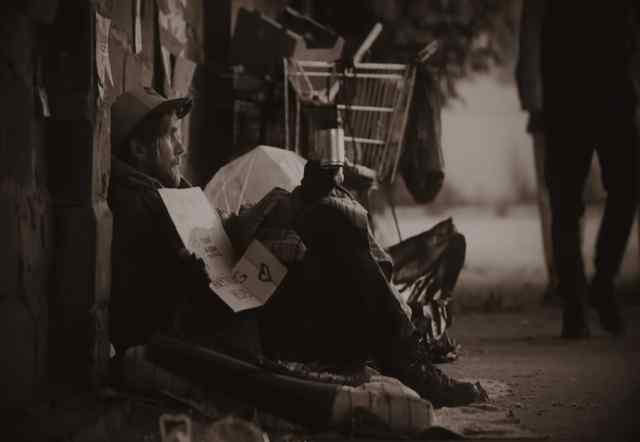
They share a despairing vision of the decline of Main Street, U.S.A., which the
film portrays as a decrepit wasteland of crumbling storefronts and empty
streets. As Kurt Markus points his Super 8 camera out the car window, surveying
these heartland ghost towns, he laments the disappearance of traditional
small-town life.
When the tour passes through Littlefield, Tex., hometown of the country-music
star Waylon Jennings, who died in 2002, the camera fixes on a water tower with
Jennings’s name on it. Today it looms like a cemetery marker.
“It’s as if an epidemic, a plague rolled through and everyone died in a few
weeks,” Kurt Markus says, calling Littlefield “a Texas Pompeii.”
Neither he nor his son, who is credited as co-director and photographer, are
shown. Nor are Mr. Dylan and Mr. Nelson. Kurt Markus does not interview Mr.
Mellencamp, whose music fills the soundtrack. He doesn’t visit Mr. Mellencamp’s
bus to capture an insider’s view of the tour. The “you” in the film’s title is
Kurt Markus, and his sporadic commentary has the oracular tone of a prose poem.
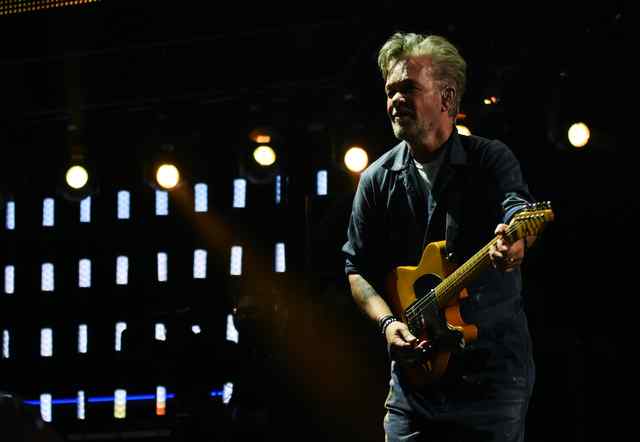
The documentary divides its time between concert footage and stopovers during
which Mr. Mellencamp recorded his spare, cranky roots album, “No Better Than
This,” at three historic sites, using old-fashioned technology. Produced by T
Bone Burnett, who plays guitars, “No Better Than This” was recorded with a
single vintage microphone and a 50-year-old mono reel-to-reel tape recorder.
The first of the three sites is in Savannah, Ga., at the First African Baptist
Church, which calls itself America’s oldest black church and was once a hiding
place for runaway slaves. At the Sun Studio in Memphis, Mr. Mellencamp and his
musicians play with a twangy ferocity, overlooked by pictures of Elvis Presley
and other rockabilly pioneers, whose images jack up their excitement. The third
destination is Room 414 of the Gunter Hotel in San Antonio, where Robert Johnson
made his earliest recordings in 1936.
Because Kurt Markus’s Super 8 camera is the cinematic equivalent of a single
microphone, the film’s look matches the scratchy quality of its ancient (by rock
’n’ roll standards) sound. The crudeness brings out the elemental quality of
music that digs deeply into the soil of working-class American life in songs
that express the defiance, despair and nobility of people who refuse to go down
without a fight. The concert scenes in outdoor arenas are less successful
because of the low fidelity.
Kurt Markus recalls growing up in Montana and the mystical experience of hearing
music on the radio wafting from thousands of miles away, and the songs on “No
Better Than This” convey this wondrous sense of mystery. It is the essence of
what the critic Greil Marcus, musing on Bob Dylan and the Band’s “Basement
Tapes,” called the “old, weird America.”
Back
|